MoviPé
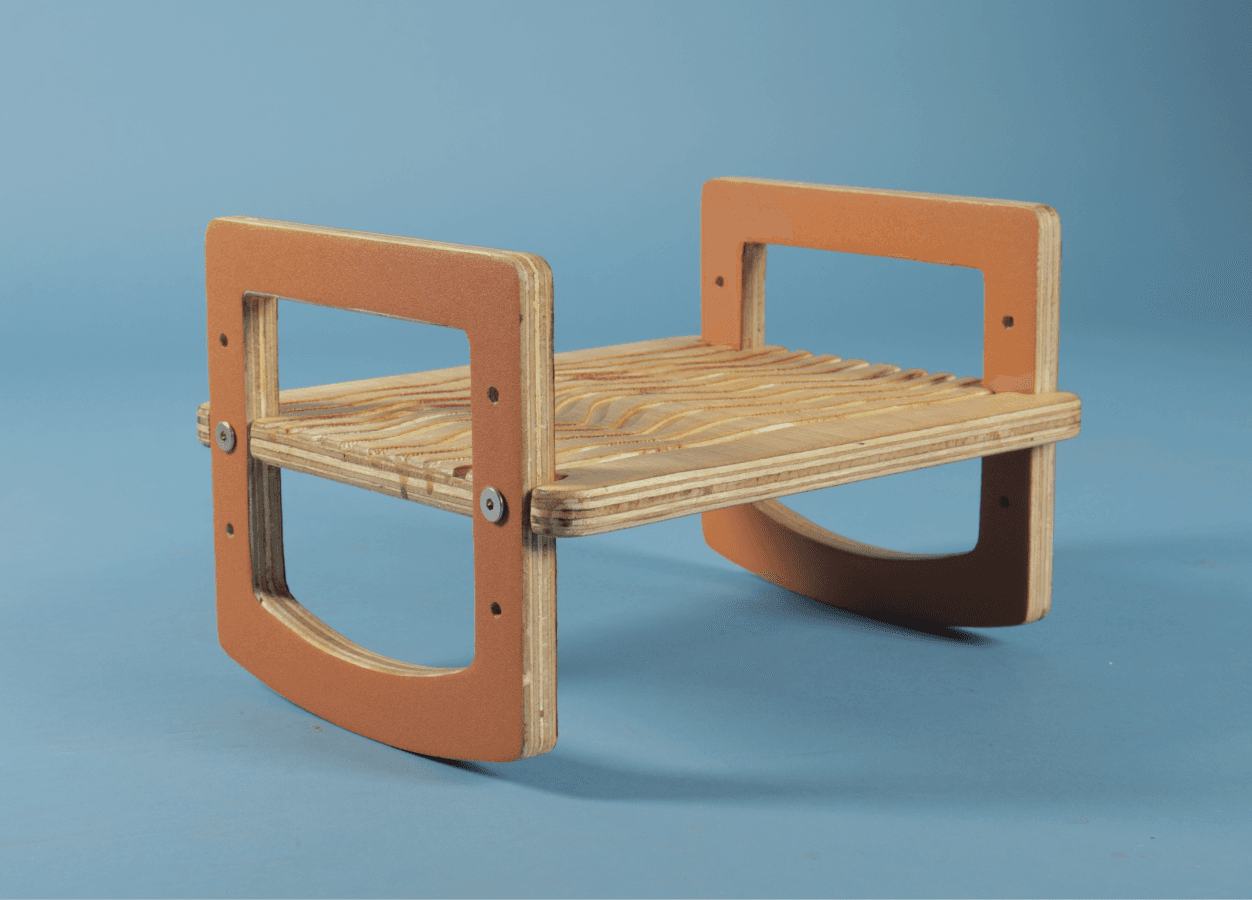
A children's footrest for kids with different bodily and sensory needs, improving posture, comfort, and self-regulation. Developed in partnership with the furniture store Novidário and the Rede FAB LAB Livre de São Paulo.
Partnership: Giovanna Retti
YEAR
2025
DELIVERABLES
Research
1:1 scale prototype
Technical drawing
Visual Identity
Illustrations
Market opportunity
TARGET AUDIENCE
Children aged 6 to 8 with accessibility needs
CHALLENGE
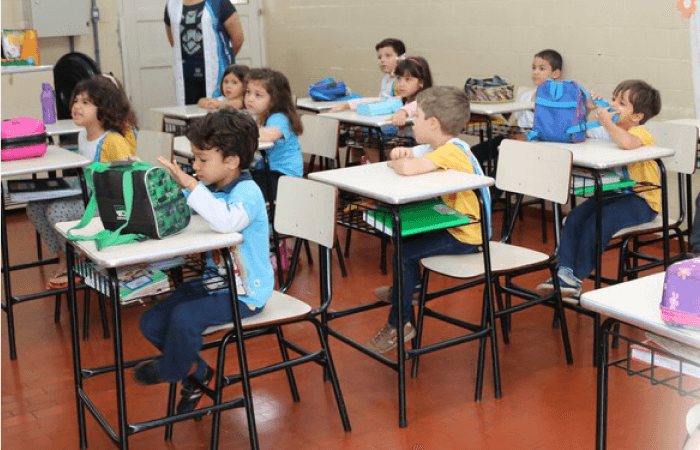
School furniture is designed to be used by children at many different growth stages, and rarely allows for any personalization. The accessibility challenge is greater still when it involves neurodivergent children with specific needs.
Through research, interviews with educational psychologists, and classroom visits, we identified a few main pain points:
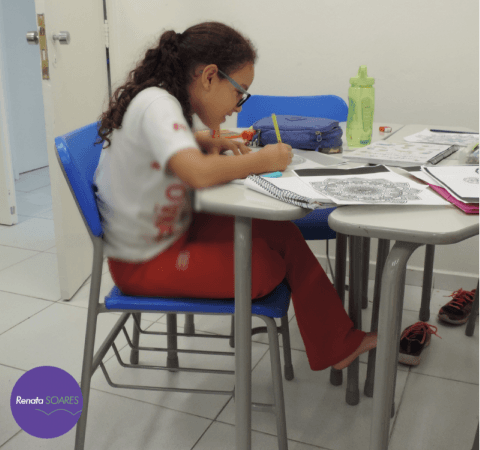
- Standardized chairs that don't follow the height variation between children in the same class
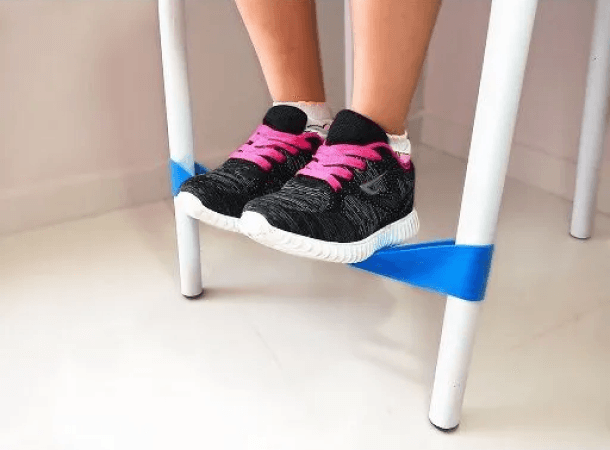
- Feet with no support on the floor through long periods of sitting, causing fatigue and poor posture
- The need to move treated as misbehavior, with 85% of teachers describing these children as restless and agitated
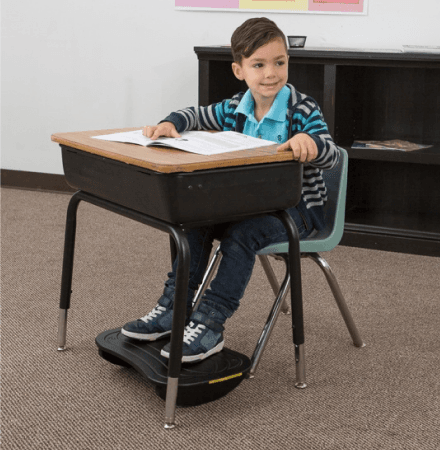
- A lack of self-regulation alternatives that don't create noise or distraction for classmates and teachers
- Inclusive school furniture limited to expensive solutions, out of reach for low-income schools
APPROACH
Taking the Double Diamond design-thinking process as a starting point, my methodology went as follows:
DISCOVERY
- Desk research (ADHD, child ergonomics, materials)
- Trend research
- Interviews with educational psychologists
- Market analysis
- Technical visits (Fab Lab CEU Heliópolis)
DEFINITION
- Persona
- Project pillars
- Moodboard
- Ergonomic requirements
- Concept testing
IDEATION AND PROTOTYPING
- Ergonomics studies
- Sketches
- Prototype iterations
- Material selection
- Technical drawing
- Final prototype
- Visual identity construction
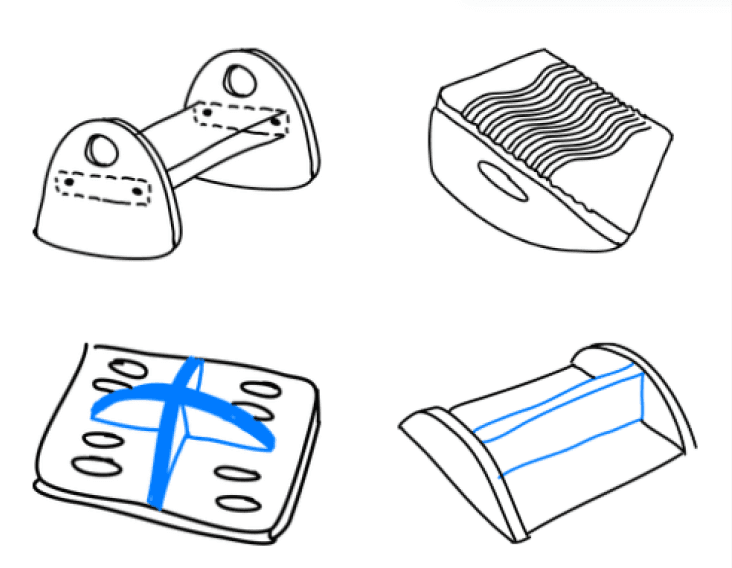
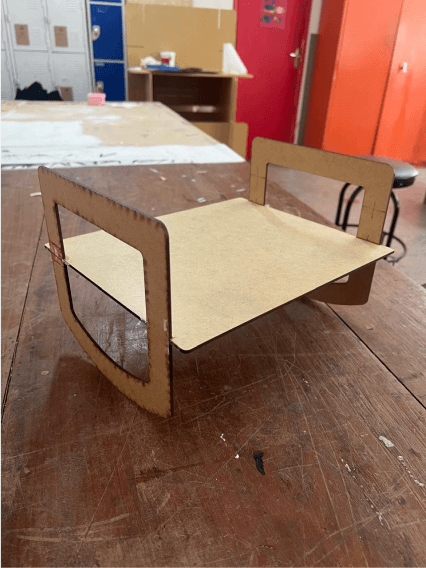
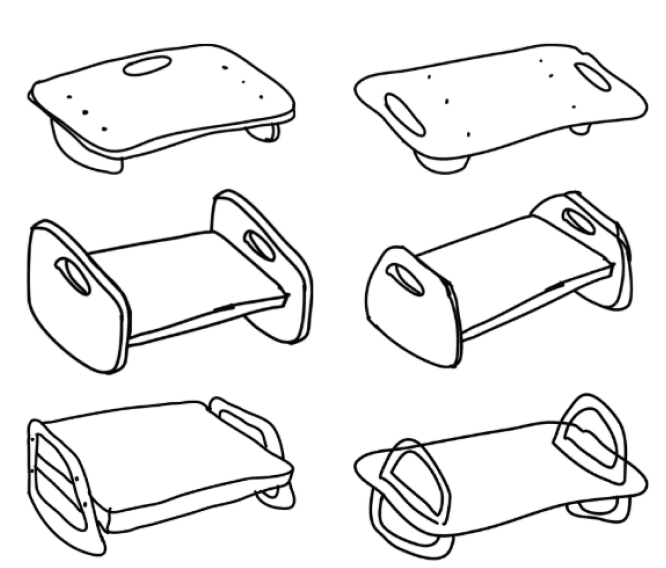
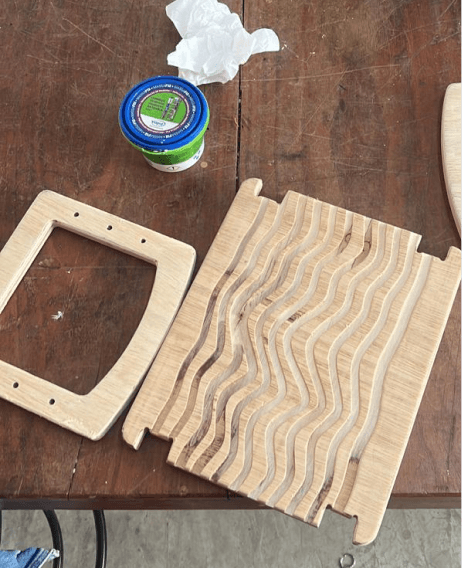
THE FOOTREST
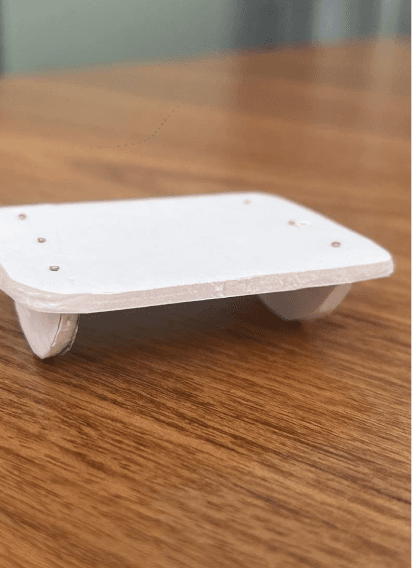
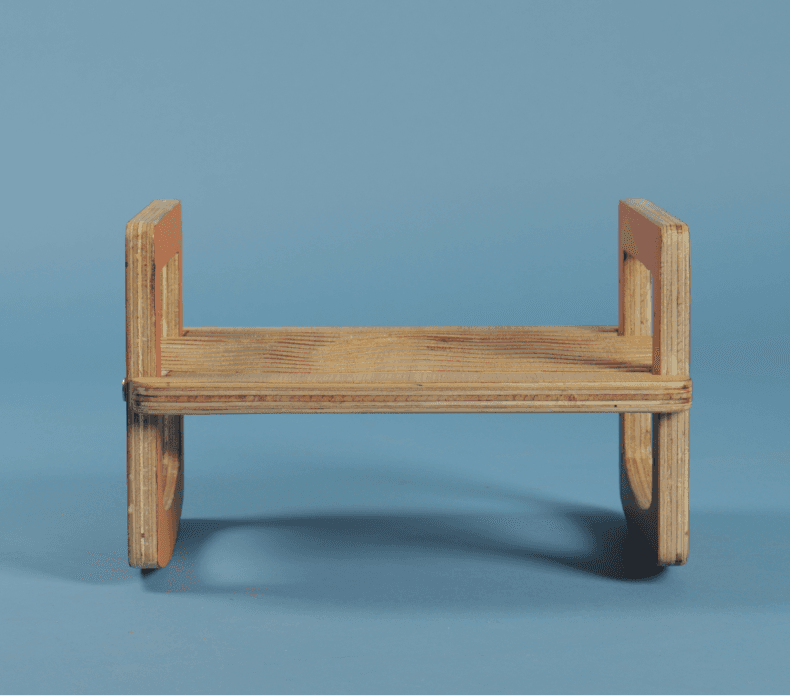
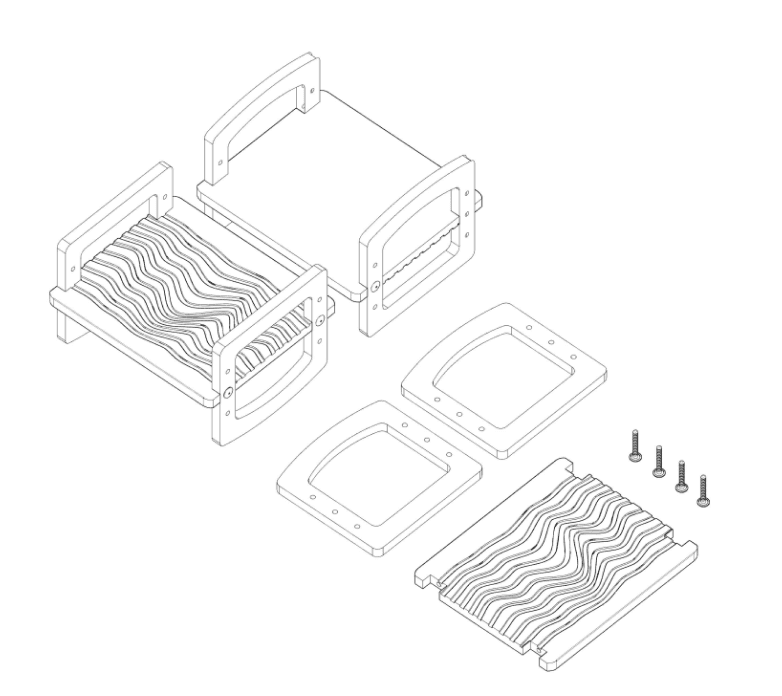
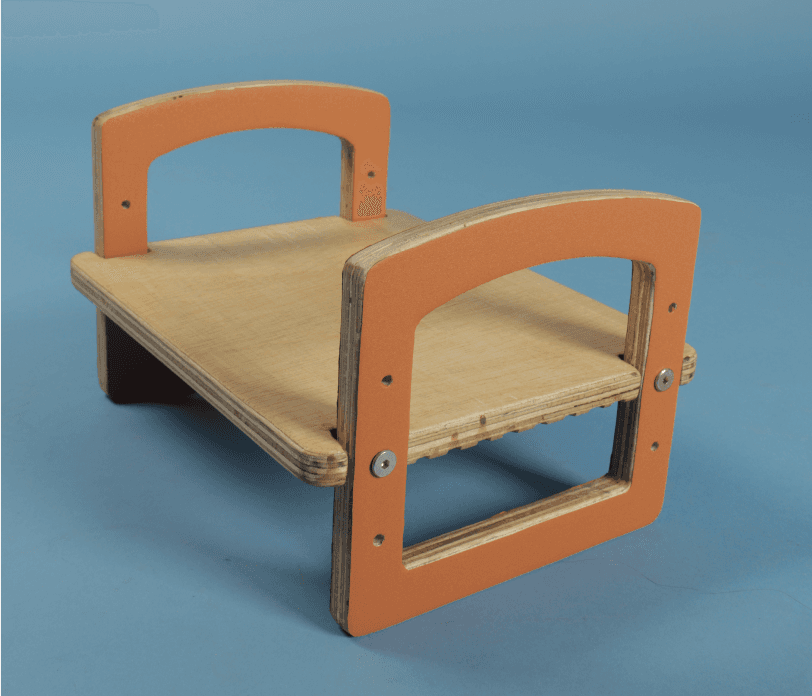
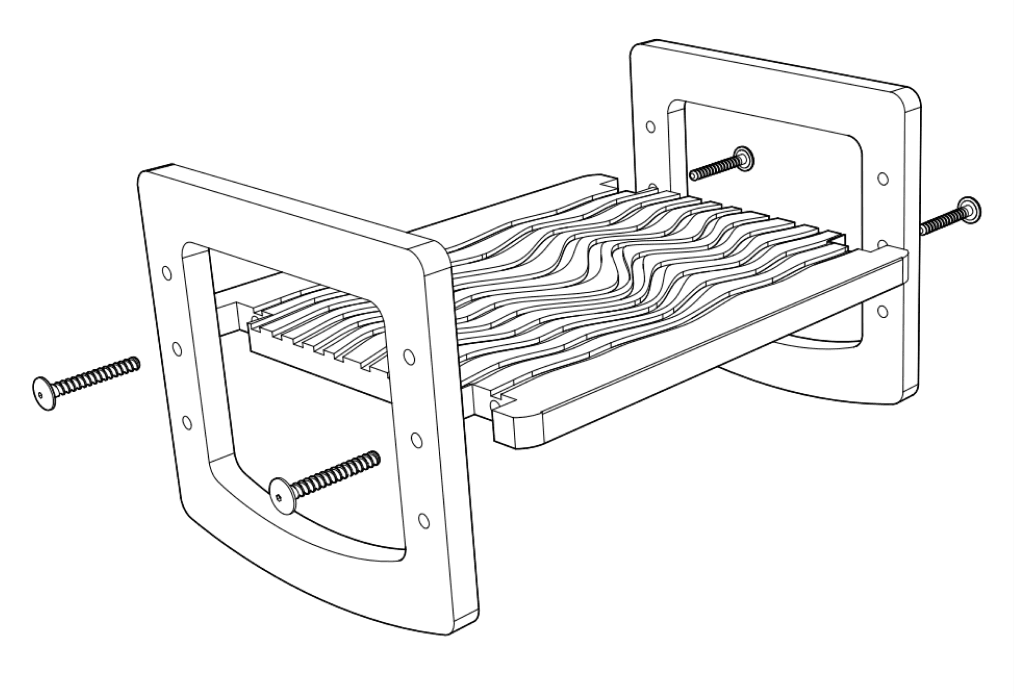
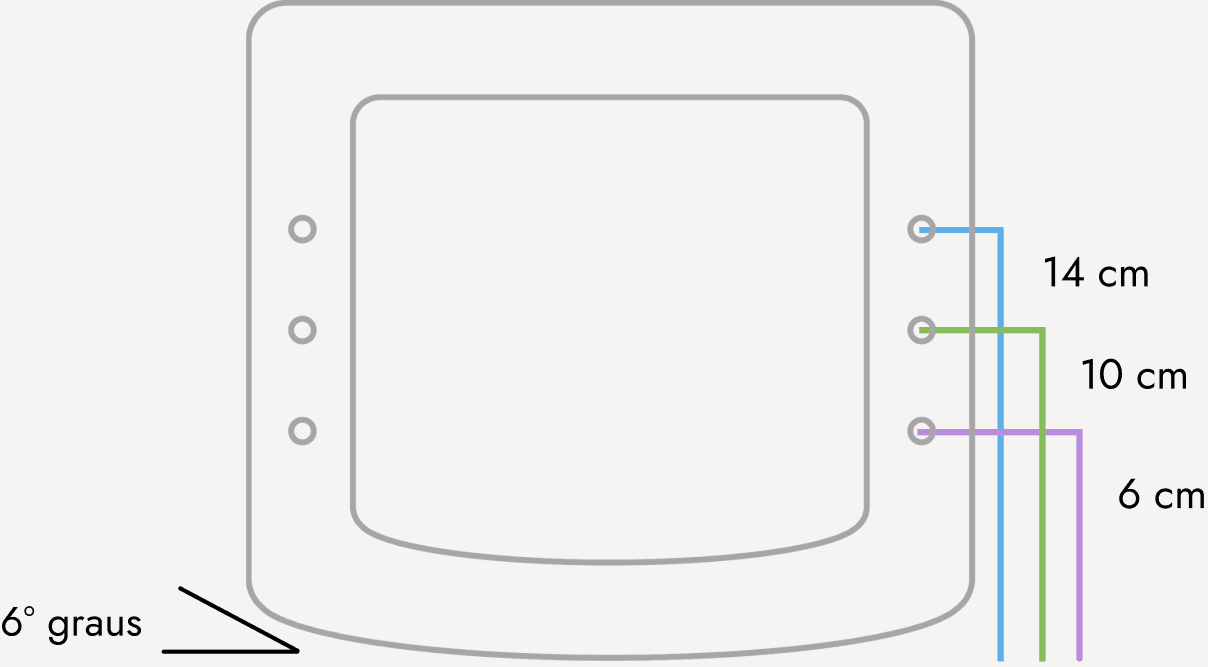
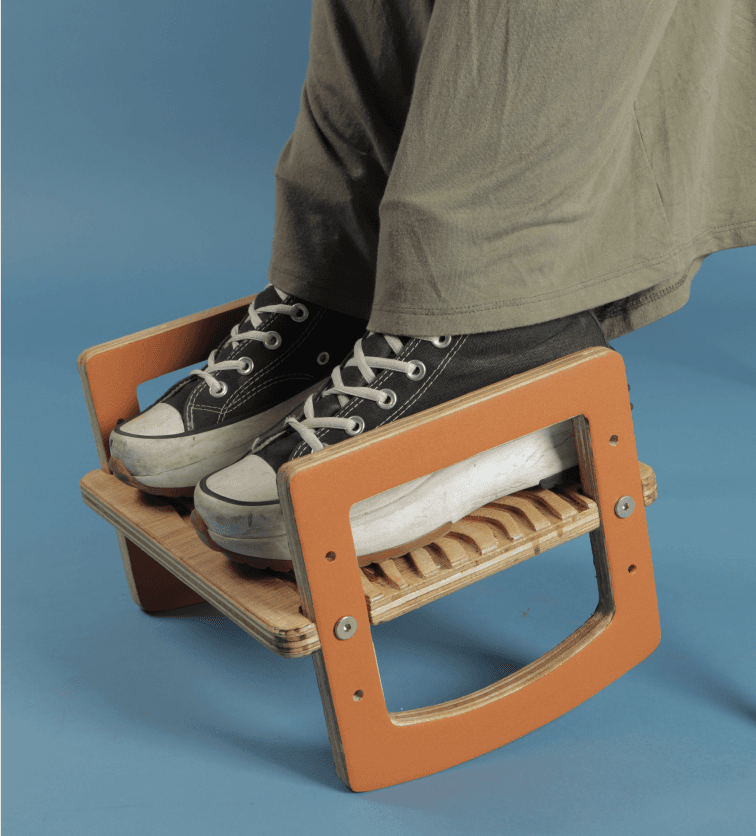
The MoviPé has two sides: one static and one with a 6-degree rocking angle. Both ways of using it support postural alignment and comfort.
The rocking side allows the discreet movement that children who need to move in order to concentrate and self-regulate rely on in class.
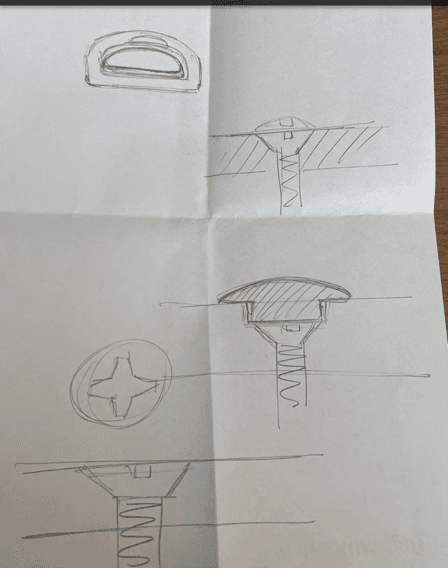
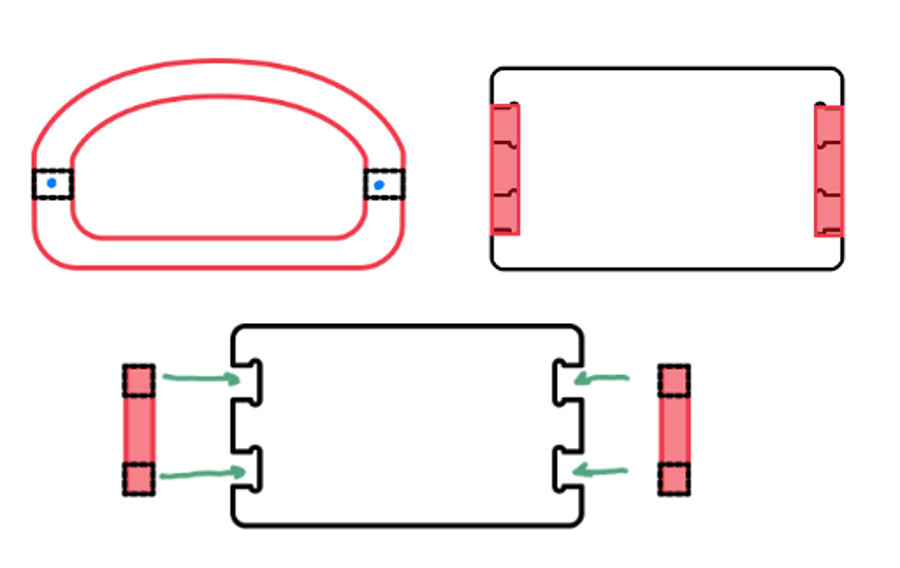
Made of varnished marine plywood, with handles covered in textured melamine laminate.
ERGONOMICS
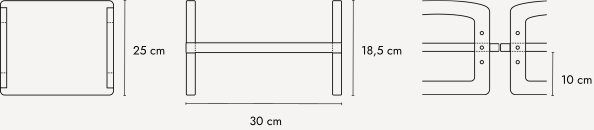
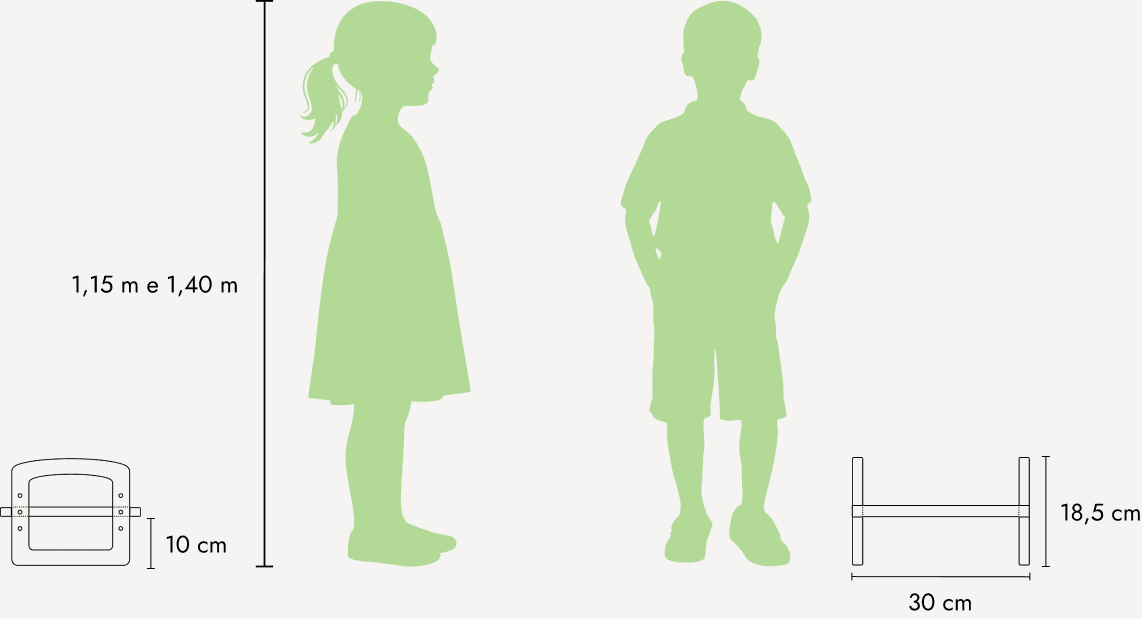
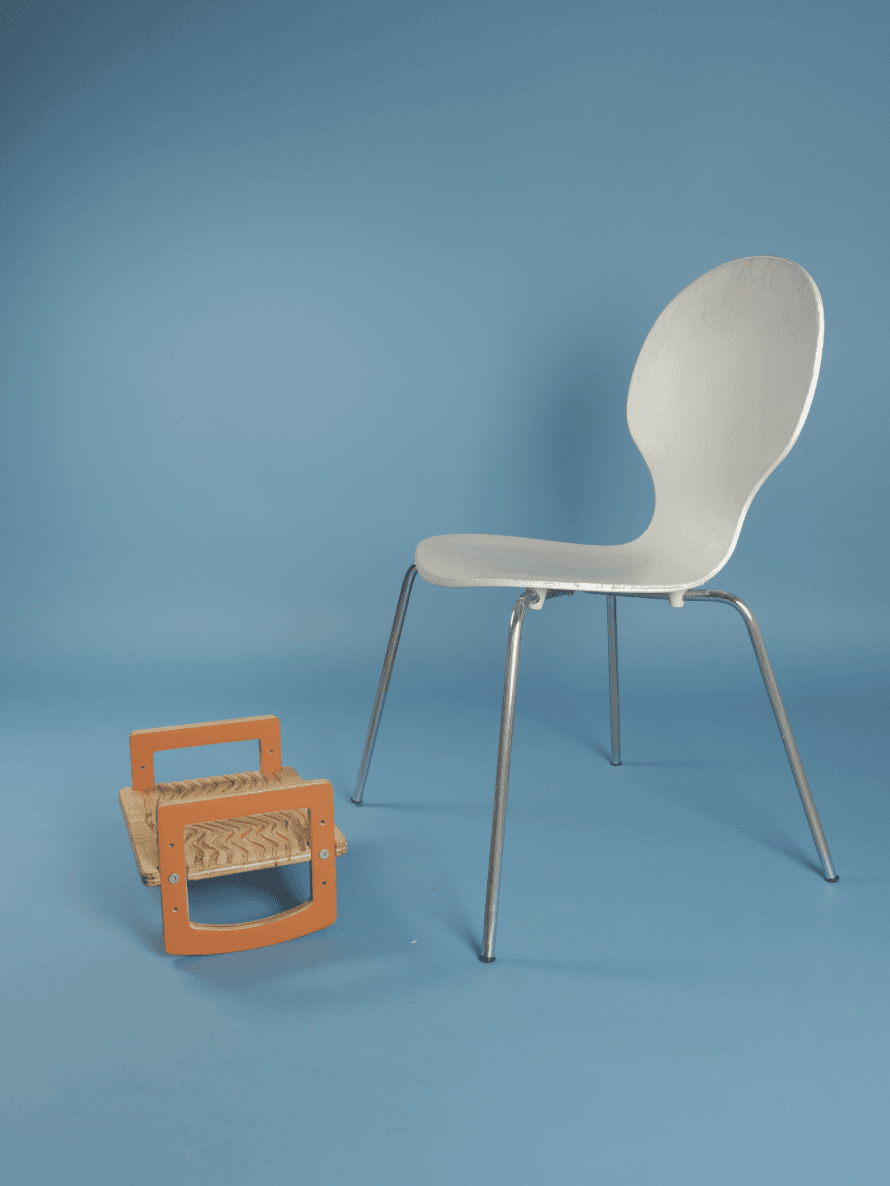
Swinging feet are a symptom of discomfort and distraction. To make sure children of many heights could use the footrest, the piece has three height settings: 6, 10, and 14 cm.
Those values were calculated from the popliteal-height variation (measured sitting with the knees at 90°) of children between 1.15 and 1.40 meters, and from the difference between school chairs (T3 and T4 standards).
FINISHES
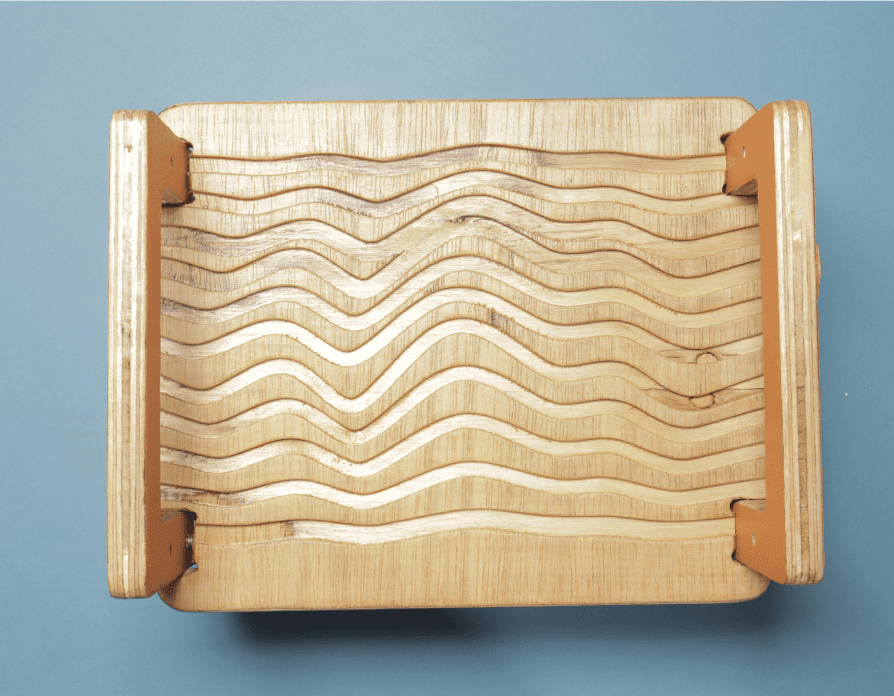
The handles are covered in textured melamine laminate and the corners are rounded, for safe daily use.
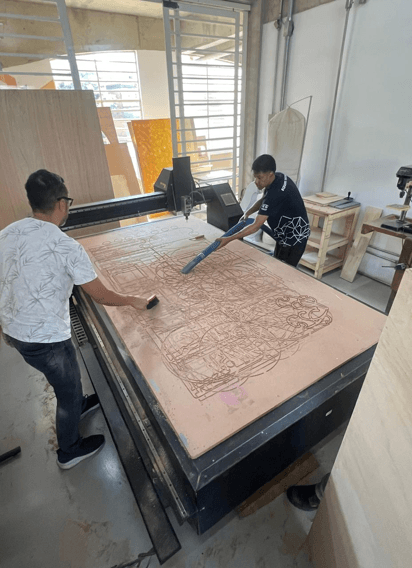
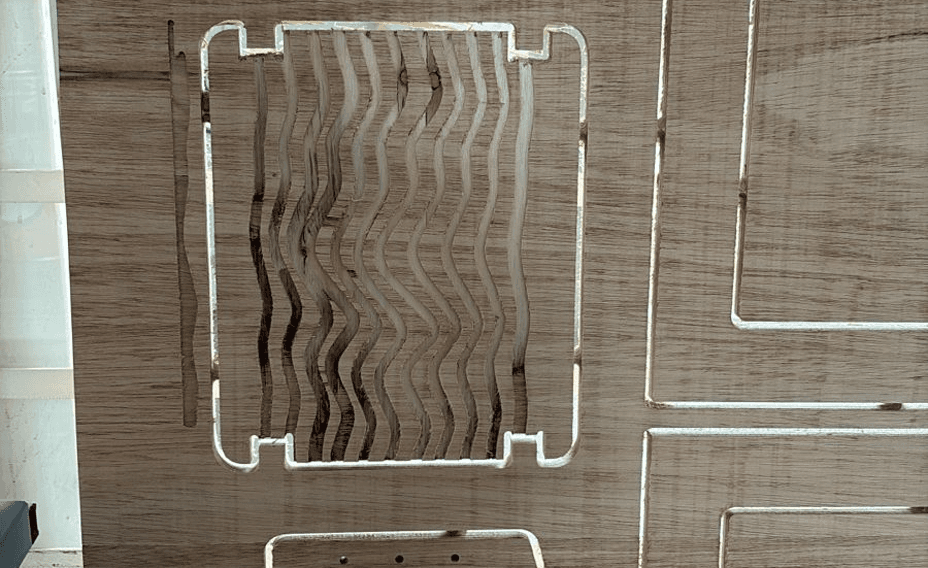
The resting surface is carved with an organic wave texture using a CNC router, in a varying pattern that works both as a non-slip surface and as tactile stimulus during class.
CNC machining makes it viable to manufacture in other materials, such as recycled polymer sheets, and in a range of textures (examples below).


VISUAL IDENTITY
Since the goal was to fold the product into the Novidário brand, the visual identity was limited to the naming, the logo, and the feature illustrations.
The colors follow the Novidário palette, with slight saturation shifts to make the product stand out.
The name MoviPé asserts that children moving their feet is natural, rather than treating it as restlessness to be contained.
The orange of the handle covering references ADHD awareness in children.

ILLUSTRATIONS
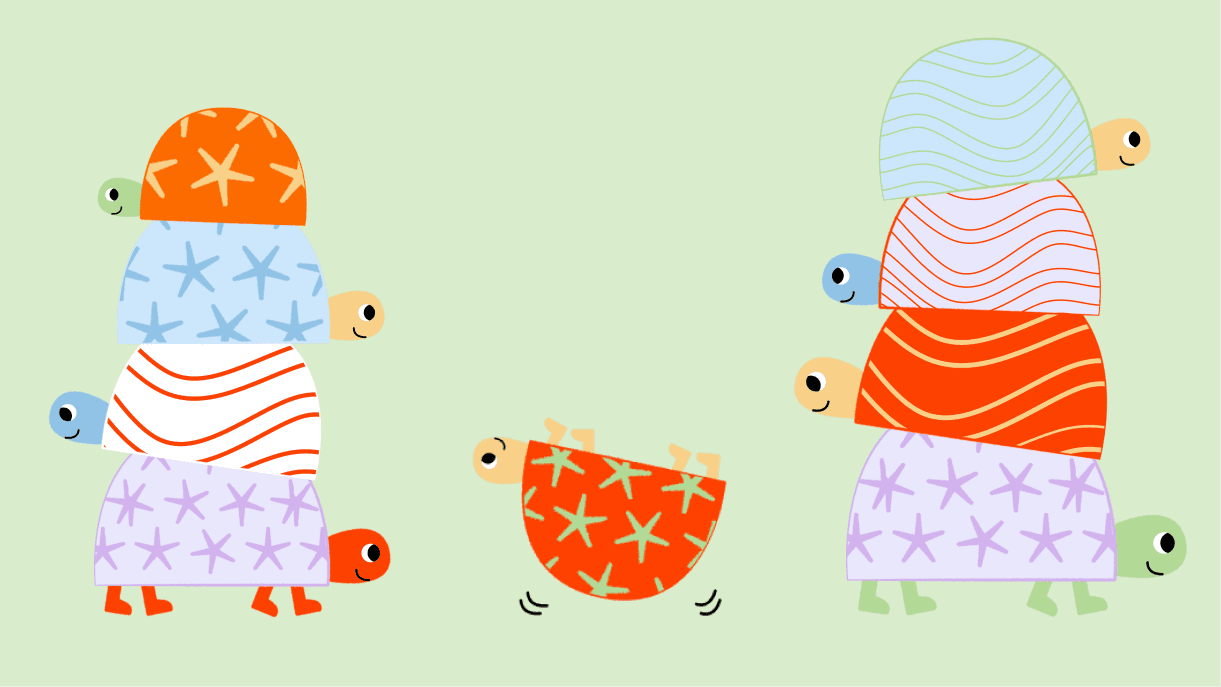
Every turtle illustration and supporting graphic was drawn by hand, in a playful crayon style. The turtles' shells echo the texture options carved into the MoviPé, tying the illustration to the object.
In animation, the MoviPé turtle brings humor by reproducing the product's rocking motion.
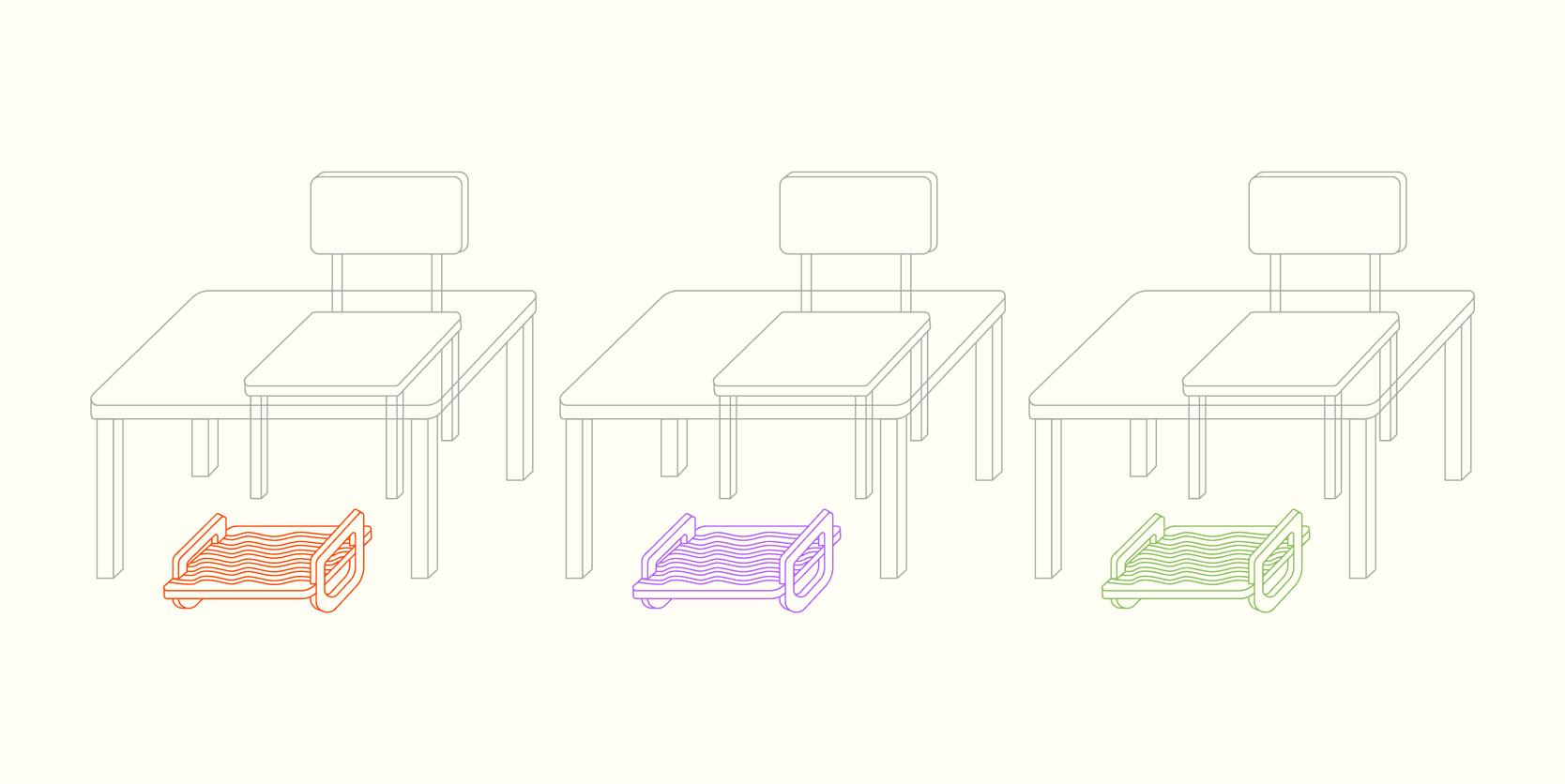
Isometric vector illustrations were created to contrast with the playful turtles and to build patterns for promotion.
MARKET OPPORTUNITY
The product was prototyped for children, but adults also need sensory and motor accessibility solutions — especially as home-office furniture sales grow. The MoviPé solution lets the Novidário brand lead the market for sensory accessibility with a line aimed at adults.
IMPACT
The proposal answers the pain points raised in research with a low-cost school-furniture accessory that fills the sensory and bodily accessibility gaps of growing children. Three height settings, two ways to use it — static or rocking — and compatibility with any chair.
It reduces fatigue, improves posture, and releases energy quietly and discreetly, without distracting the classroom. CNC manufacturing keeps production viable at low cost.
Published as an open tutorial on Instructables, the MoviPé makes it easier for schools to adapt and for children with different bodily and sensory needs to concentrate in class.